

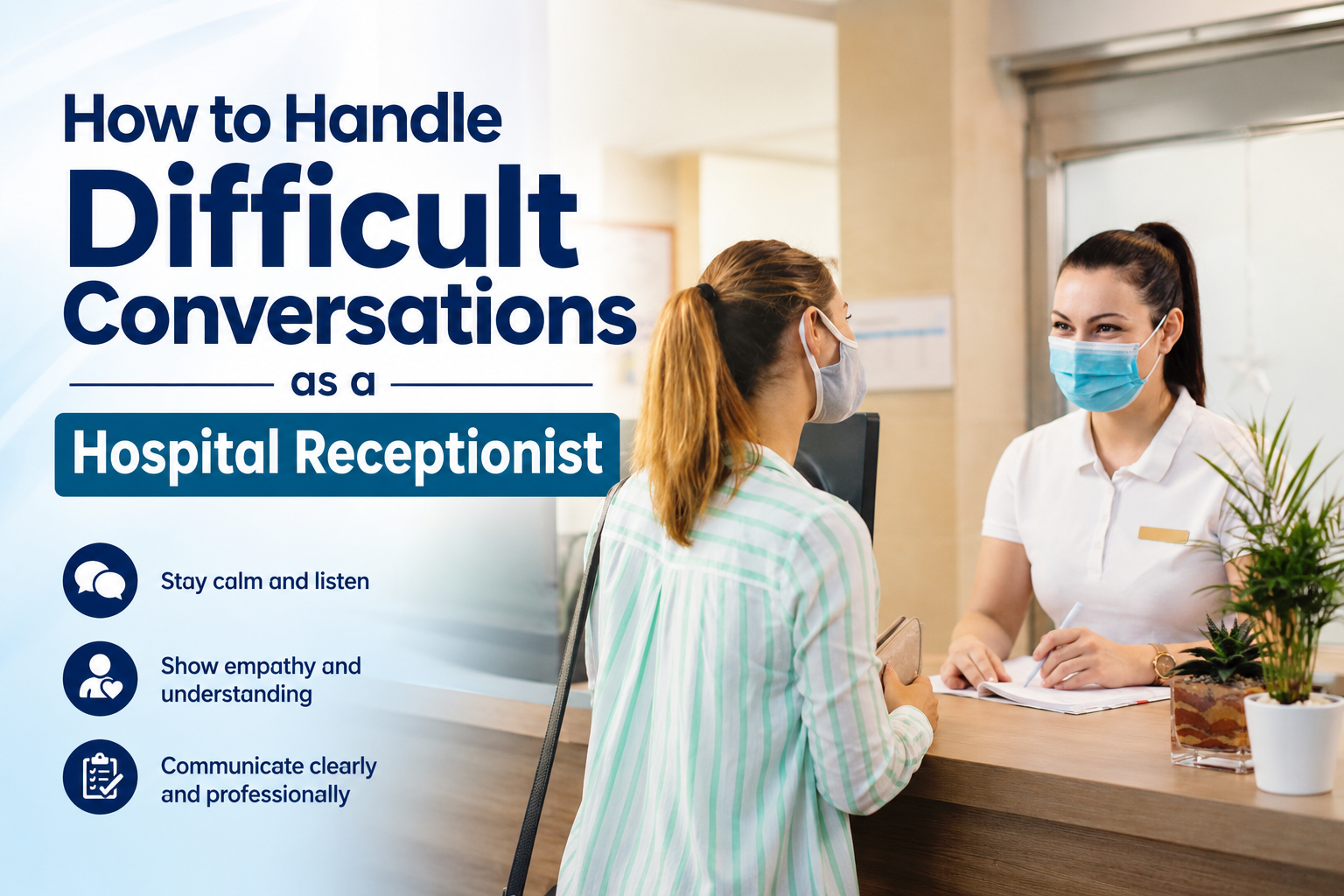
Working as a hospital receptionist requires more than scheduling appointments and answering phone calls. Every day, receptionists interact with patients and families who may be anxious, frustrated, or worried about their health. An AI app for English speaking can help receptionists practice real-life conversations, improve communication, and build confidence before handling challenging situations at the front desk.
The way you communicate during these moments can have a lasting impact on a patient’s experience. A calm voice, active listening, and empathy can turn a stressful interaction into a positive one. Fortunately, effective communication is a skill that anyone can develop with consistent practice.
Why Difficult Conversations Happen
Hospitals are often emotional environments. Patients may be experiencing pain, uncertainty, or fear, while family members may feel overwhelmed. Common situations that can lead to difficult conversations include:
Long waiting times
Appointment scheduling issues
Insurance or billing questions
Missing medical documents
Visitors requesting restricted access
Patients expressing frustration or anxiety
Understanding the reason behind a person’s emotions helps you respond with patience instead of reacting emotionally.
Stay Calm and Professional
One of the most important skills for a hospital receptionist is staying calm under pressure. Even if a patient raises their voice, maintaining a professional attitude helps prevent the situation from escalating.
Take a deep breath, keep your tone respectful, and avoid interrupting. Your calm response often encourages the other person to become calmer as well.
Remember that most patients are frustrated with the situation—not with you personally.
Listen Before You Respond
Active listening is essential during difficult conversations. Give the patient your full attention and allow them to explain their concerns without interruption.
Simple responses such as:
“I understand your concern.”
“Thank you for explaining the situation.”
“Let me see how I can help.”
Show empathy while reassuring the patient that they are being heard.
Use clear and simple language.
Medical environments can already feel confusing for patients. Avoid using technical terms or complicated explanations whenever possible.
Instead of giving long answers, explain information step by step. Clear communication reduces misunderstandings and helps patients feel more comfortable.
Strengthen Receptionist Communication Skills
Developing strong receptionist communication skills is one of the best ways to improve patient interactions. This includes speaking clearly, listening actively, showing empathy, maintaining positive body language, and handling complaints professionally. Receptionists who continuously improve these skills create a welcoming environment and help patients feel respected, even during stressful situations.
Handle Complaints with Empathy
Not every complaint can be solved immediately, but every patient deserves to feel respected.
When someone is upset:
Stay patient.
Acknowledge their feelings.
Explain what you can do.
Offer realistic solutions.
Involve a supervisor if necessary.
Avoid making promises you cannot keep. Honest communication builds trust even when the outcome isn’t ideal.
Practice Real-Life Conversations
Confidence comes through preparation. Practicing different communication scenarios helps receptionists respond more naturally during real interactions.
For example, you can rehearse conversations involving delayed appointments, insurance questions, emergency situations, or visitor policies. The more scenarios you practice, the easier it becomes to remain calm when they happen.
Platforms like TalkyWave allow users to practice realistic workplace conversations with AI. These interactive simulations provide a comfortable environment to improve speaking confidence, communication clarity, and professional responses without the pressure of a live audience.
Final Thoughts
Hospital receptionists are often the first people patients meet when they enter a healthcare facility. Their communication can influence the entire patient experience.
By practicing empathy, listening carefully, speaking clearly, and remaining professional during challenging situations, receptionists can handle difficult conversations with greater confidence. Regular practice, continuous learning, and tools like TalkyWave can help strengthen communication skills and prepare receptionists for the real-world conversations they face every day.